
Here’s what the path often looks like and why it’s such a rewarding (and demanding) profession.
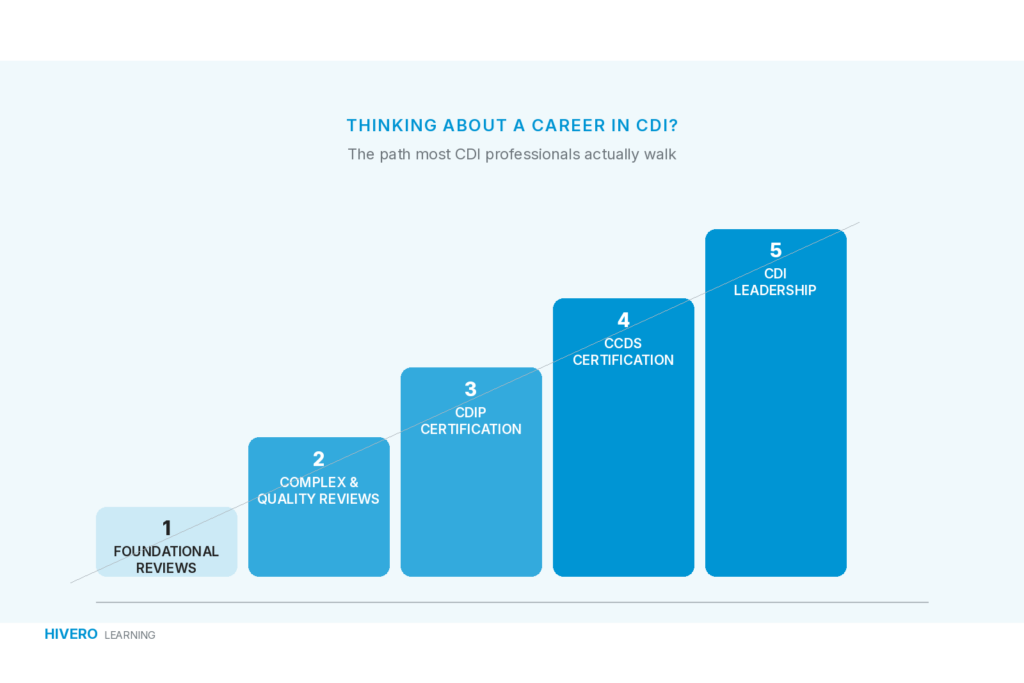
Most CDI careers begin with foundational education. Whether you come from nursing, coding, HIM, or another clinical background, a strong CDI fundamentals course helps you understand why documentation matters and how CDI fits into quality, compliance, and patient care. From there, finding an employer willing to provide on-the-job training is key. CDI is not a role you fully learn in a classroom; it’s learned in the record, one chart at a time.
CDI also comes with a steep learning curve. In fact, when I entered CDI, I was warned it wouldn’t feel comfortable right away and that real proficiency often takes a full year of learning and experience. The most successful CDSs don’t stop learning when the workday ends. They spend time off the clock reading Coding Clinic, reviewing guidelines, researching diagnoses, and deepening their clinical and regulatory knowledge. Curiosity and commitment are what separate someone who “does CDI” from someone who truly excels in it.
As experience grows, so does scope. Many CDSs start with foundational reviews, focusing on core diagnoses and documentation clarity. With time and targeted education, they expand into more complex reviews, including quality-focused reviews, risk adjustment, mortality, and clinical validation. Each step requires deeper critical thinking, stronger clinical reasoning, and continued education.
Along the way, certification becomes an important milestone.
- CDIP is often the first certification professionals pursue. While 2 years of CDI experience is recommended (not required), many start with 6 months to 2 years of experience as they build confidence and foundational knowledge.
- CCDS is typically pursued later, often after 2–3 years of CDI experience, depending on educational background and eligibility requirements. This credential reflects a more advanced level of CDI expertise and professional maturity.
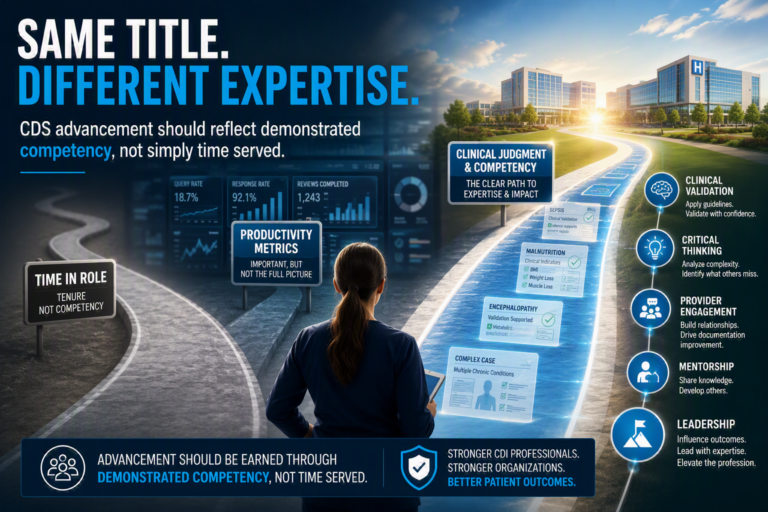
For many, the path doesn’t stop there. CDI offers meaningful opportunities to grow into leadership roles, including supervisor, manager, educator, and director positions. These roles allow experienced CDSs to influence strategy, mentor others, shape education, and elevate documentation practices across an organization.
CDI isn’t an easy profession, but it is a powerful one. For those willing to invest in learning, stretch beyond comfort zones, and commit to continuous growth, CDI offers a career with impact, longevity, and opportunity.
If you’re considering CDI or wondering what’s next, education, curiosity, and intentional growth will always open the next door.