
This is one of the most common questions I get from nurses and other healthcare professionals who are curious about transitioning into Clinical Documentation Integrity (CDI). And the truth is, there isn’t just one big difference. There are several, and they tend to show up pretty quickly once you make the move.
Here are a few of the biggest changes I noticed when I transitioned into CDI, along with the advice I usually share with those considering the field.
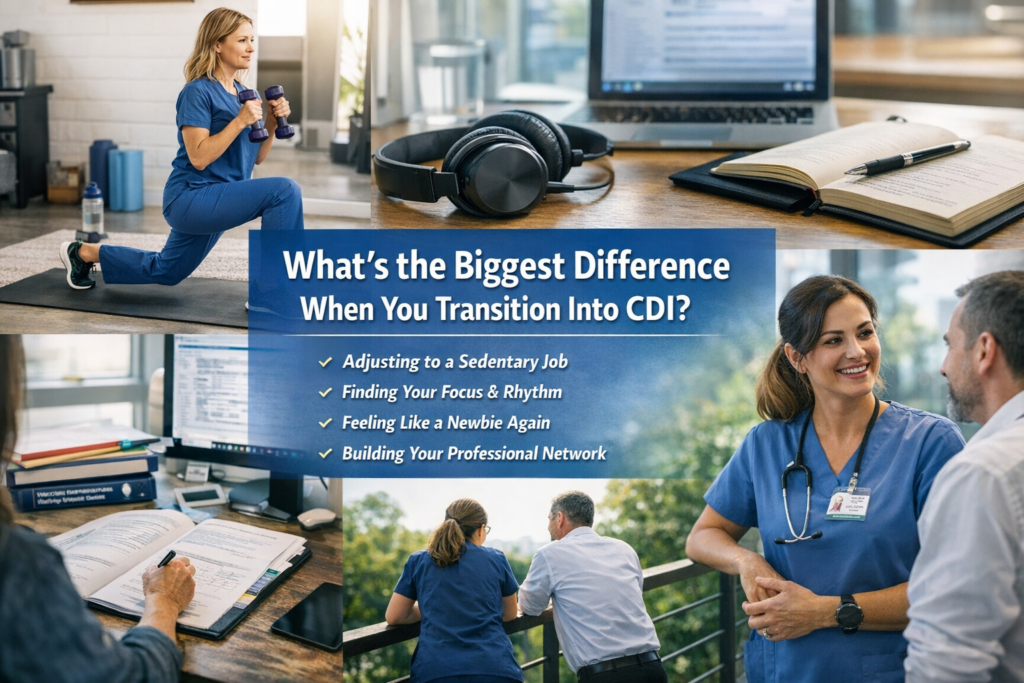
1. The Job Is Much More Sedentary Than You Expect
If you’re coming from a bedside or other clinically active role, this may be one of the biggest adjustments. CDI work is largely desk‑based, and sitting for long stretches can take some getting used to, both physically and mentally.
To combat this, I make a very intentional effort to build movement into my day. Sometimes that’s only 15 minutes at a time, wherever my schedule allows. I also try to get up and step outside for about five minutes a few times a day. That fresh air and change of scenery does wonders. It gives me a mental reset so I can come back to my desk more focused and refreshed.
You don’t need an elaborate routine. Small, consistent breaks can make a big difference.
2. Everyone Reviews Records Differently, and That’s OK
One thing you’ll quickly notice in CDI is that no two people seem to review charts the same way. Some CDSs need total silence. Others prefer peaceful music or white noise to drown out distractions.
For me, staying focused and energized means listening to music. I created a playlist that helps me keep my momentum throughout the day. Fair warning, my playlist is not everyone’s cup of tea. I tend to prefer fairly hard rock. But it works for me.
And that’s the key point: find what works for you. Don’t feel pressured to adopt someone else’s workflow or habits just because they’re successful. Productivity in CDI often comes down to creating an environment that helps you think clearly and stay engaged.
3. CDI Can Feel Like Being a New Nurse All Over Again
No matter what role you came from or how much of an expert you were, CDI has a way of humbling you.
Many people I’ve spoken with (and worked alongside) agree that it can take six months to a year to really feel comfortable with chart reviews, coding guidelines, Coding Clinic guidance, and crafting clinically supported queries. And during that time, it’s very common to feel like a novice again. That can cause frustration in many people.
My advice here is simple but important: give yourself grace.
Set realistic expectations for your growth. Allow yourself time to learn. CDI is a specialty that requires both clinical knowledge and a strong understanding of coding, regulatory guidance, and documentation standards. That doesn’t happen overnight.
I’ve also noticed that the people who tend to excel more quickly in CDI are those who stay curious outside of work hours, reading, researching, studying, and actively expanding their knowledge base. CDI is a lifelong learning field, and getting comfortable with that mindset early on is incredibly helpful.
4. Networking Is More Important Than You Might Realize
One of the things I truly love about CDI is the community. There is a genuine willingness among professionals in this field to share knowledge, struggles, successes, and lessons learned.
LinkedIn is a fantastic platform for connecting with credible voices and industry leaders in CDI. Following thoughtful discussions and engaging with others’ experiences can help you grow faster and feel far less isolated, especially when you’re new.
Another great option is getting involved locally. Becoming active in your state ACDIS chapter is an excellent way to network and learn closer to home. I’m fortunate to live in Florida, where our FLACDIS chapter meets four times a year. Education is solid, the people are welcoming, and it’s also a great way to stay informed about vendors and evolving tools in the field.
Is CDI Right for Everyone?
CDI is a great profession with meaningful growth and professional development opportunities, but it’s not for everyone. And that’s okay.
If you’re interested in CDI, I strongly encourage you to reach out to people currently working in the field and ask questions. If you’re applying internally within your organization, connect with leadership and see if you can shadow a CDS for a few hours. Seeing the role in action can be incredibly valuable and insightful.
That experience may help you fall in love with the profession, or it may help you realize that CDI isn’t the right fit for you. Either outcome is a win, because it allows you to make an informed decision about your career path.
If you’re considering CDI, stay curious, stay patient with yourself, and don’t hesitate to learn from those who’ve already walked the path. It’s a challenging role, but for the right person, it can also be deeply rewarding.